


Maryta Osorio – Octuber 14, 2026
All-Inclusive Resort vs. Private Venue: Which Wedding Setup Actually Fits Your Day
Two wedding styles. One important decision. Discover whether an all-inclusive resort or a private venue is the right fit for your Mexico wedding.
The real difference between an all-inclusive resort package and a private venue isn’t the price tag on the brochure. It’s how much control you keep over cost, customization, and the clock once you’ve signed. Resort packages fit couples who want one contract and one coordinator handling the logistics, even if that means a reception that ends by 10 or 11 PM and fewer choices on vendors and decor. Private venues fit couples who want to set their own timeline and bring in their own vendors, as long as they’re ready to coordinate more pieces themselves or hand that coordination to a planner.
That’s the actual decision. Here’s how the two formats compare criterion by criterion.
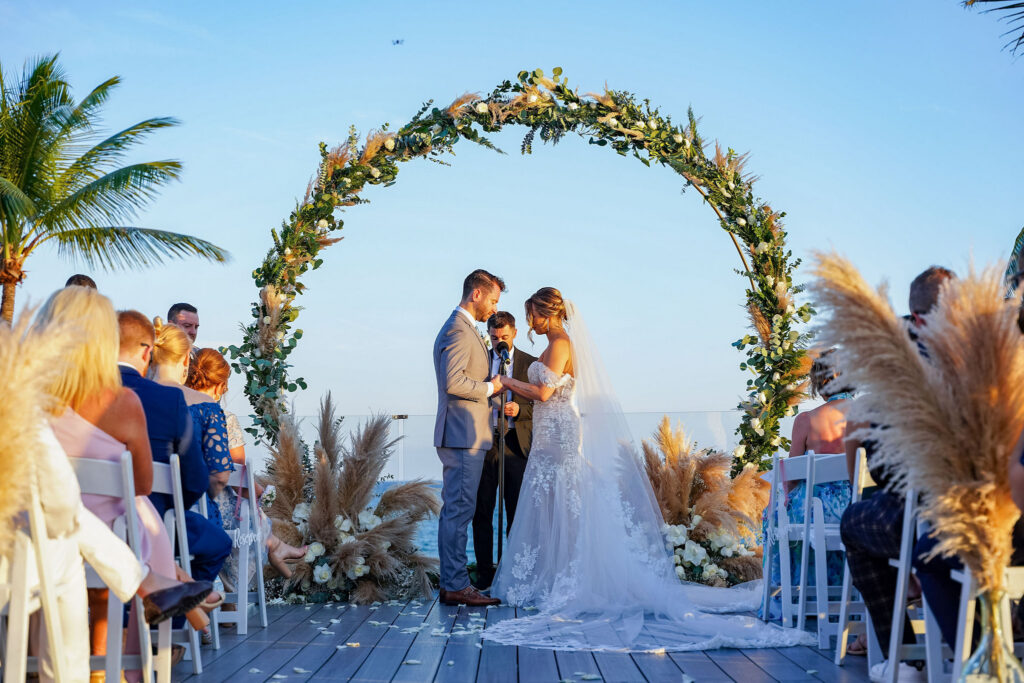
All-Inclusive Resort
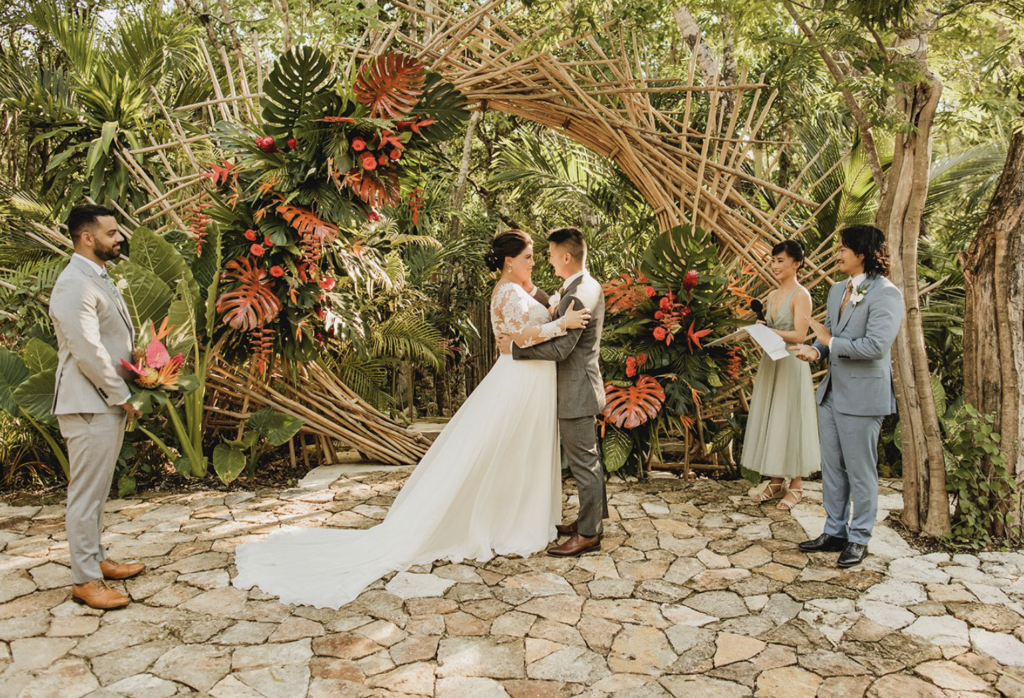
Private Venue
All-Inclusive Resort vs. Private Venue: Side-by-Side Comparison
| Criterion | All-Inclusive Resort | Private Venue |
|---|---|---|
| Cost Structure | One bundled package price, with possible extra charges for upgrades and overages. | Venue rental plus separate vendor contracts and service costs. |
| Customization | Usually limited to package options and approved upgrades. | Greater control over layout, decor, and event design. |
| Event End Time | May be subject to property-wide noise policies, often around 10–11 PM. | Potentially more flexible, depending on venue rules and local restrictions. |
| Vendor Flexibility | Outside vendors may be restricted or subject to additional fees. | Generally more freedom to select your own vendors. |
| Coordination | An in-house coordinator helps manage the event logistics. | You or an independent planner coordinate the vendors and details. |
| Guest Convenience | On-site accommodations and resort amenities can simplify the guest experience. | Guests may need separate lodging and transportation arrangements. |
What "all-inclusive" actually includes (and what it doesn't)
Most resort wedding packages bundle the ceremony and reception venue, a coordinator, catering, standard decor, and photography into one price. That’s the appeal: you sign one contract and the big pieces are handled.
The package price is also where the predictability ends. Common extra-cost triggers include custom decor or floral upgrades beyond what’s included, guest counts above the package limit, outside vendor fees if you want a photographer or band the resort didn’t select, and upgrades to a private or exclusive event space within the resort. A budgeting guide from Dream Weddings Riviera Maya walks through exactly this pattern: a published starting price, followed by a list of add-ons that push the total up well past the sticker number.
None of this means the package is a bad deal. It means the number on the brochure isn’t the number you’ll pay once you add the decor you actually want, the guest count you actually have, and the vendors you actually prefer. Ask the resort directly for a full list of what counts as an upgrade and what each one costs before you compare that total to a private venue’s rental fee. A figure quoted by one property tells you nothing about another property’s pricing, so confirm it for the specific resort you’re considering rather than assuming it’s standard across the brand or the destination.
Decor and Floral Upgrades: Custom flowers and decorations may cost extra beyond the standard package.
Guest Count and Vendor Fees: Additional guests and outside vendors may increase the final price.
Exclusive Event Spaces: Private reception areas and premium locations may require additional fees.
Why resort receptions often end by 10 or 11 PM
A resort wedding reception sits inside a property that’s also hosting other paying guests who didn’t sign up for your wedding. That’s the structural reason most resorts enforce a noise cutoff somewhere in the 10 to 11 PM range, and it applies regardless of which package tier you booked or how much you spent.
Resort guest policies commonly include language prohibiting excessive noise in rooms and other hotel facilities during overnight hours, often starting somewhere between 10:00 PM and 11:00 PM. That’s typically not a wedding-specific rule. It’s a standard property-wide policy that a reception has to work around, because the resort’s other guests are the ones that policy protects.
Couples planning weddings in Mexico have noticed. A thread in the r/DestinationWeddings community asked directly about “reception options that would go past 11pm,” which tells you this isn’t a hypothetical concern. Couples are actively trying to find an exception.
This isn’t a universal rule for every resort. Some properties have later cutoffs, isolated event lawns, or separate structures built away from guest rooms. If a late reception matters to you, ask the specific resort what time their policy requires the music to stop and whether any event space on their property is exempt. Don’t assume 10 or 11 PM applies everywhere, and don’t assume it doesn’t.
Noise Restrictions: Some resorts limit late-night music to avoid disturbing other guests.
Confirm the Cutoff: Ask when music must stop and when the event space must close.
Get It in Writing: Confirm the resort’s specific policies and any extension fees before booking.
What a private venue actually gives you back
A private venue, whether that’s a villa, a beach club, or a hacienda, isn’t bound by a shared-property noise policy written to protect other paying guests. That’s the structural flip side of the resort curfew: without other guests sharing the property, you generally have more room to set your own end time.
“Generally more flexible” is the accurate framing, not “unrestricted.” A thread in r/weddingplanning captures the same tension outside of Mexico: a couple loved their venue but still had to end the reception by 11 PM, and the venue’s own agreement set that limit regardless of ownership structure. Private venues can carry their own noise ordinances, neighbor agreements, or municipal restrictions. The absence of a resort-wide policy doesn’t guarantee an open-ended night.
Along with timeline control, a private venue typically opens up vendor choice and full design and layout control. You’re not selecting from a resort’s approved list. You’re building the event from a blank space.
Before you book a private venue, ask it directly:
- What time does the event legally or contractually need to end?
- Are there any noise agreements with neighbors or local authorities?
- What’s the policy on outside vendors, and is there a fee?
- What are the setup and teardown windows, and do they cost extra?
Those four answers will tell you more about whether the venue fits your day than the photos on its website.
The coordination tradeoff: who's managing the moving pieces
This is the criterion where the resort format legitimately wins, and it deserves a straight answer instead of a footnote.
A resort’s in-house coordinator handles vendor booking, timeline management, and day-of logistics as part of the package price. That coordinator already knows the property, the catering team, and the standard setup. For a couple with a tight planning timeline or little interest in managing a dozen vendor relationships, that built-in structure is a real advantage, not just a sales pitch.
A private venue doesn’t come with that built in. You’re either assembling photographers, caterers, florists, and rental companies yourself, or you’re working with an independent planner who closes that gap for you. That’s not a reason to avoid a private venue. It’s a reason to decide upfront whether you want to take on that coordination load yourself or bring in a planning team that already manages vendor relationships across the venues you’re considering. A planner doesn’t make a private venue effortless. It makes the coordination someone else’s job instead of yours.




When the resort package is still the right call
Choose the all-inclusive resort if any of these describe your wedding:
- You have a smaller, simpler guest list and don’t need a sprawling custom layout.
- You’re working with a tight planning timeline and want a coordinator and vendor network already in place.
- You value one point of contact and one contract more than full personalization.
- You’re genuinely comfortable ending the celebration by 10 or 11 PM.
If two or more of those are true, the resort format is the better fit even if you’d prefer more personalization in theory. The reduced coordination load and cost predictability outweigh the creative limits for that kind of wedding.
Use this quick sequence to check your own fit:
- Does your reception need to run past 11 PM? If yes, lean private venue.
- Do you want to choose your own vendors? If yes, lean private venue.
- Do you want one contract and one coordinator handling the logistics? If yes, lean resort package.
Two “yes” answers pointing the same direction is a clear signal. A split result means the real deciding factor is whether you want a planner to close the coordination gap on a private venue, not whether the venue itself is right for you.
Talk through your priorities before you book
Choose a resort if…
You value convenience, bundled services, on-site accommodation, and a more centralized planning process.
Consider a private venue if…
You value customization, vendor choice, and greater control over the atmosphere and event design.